

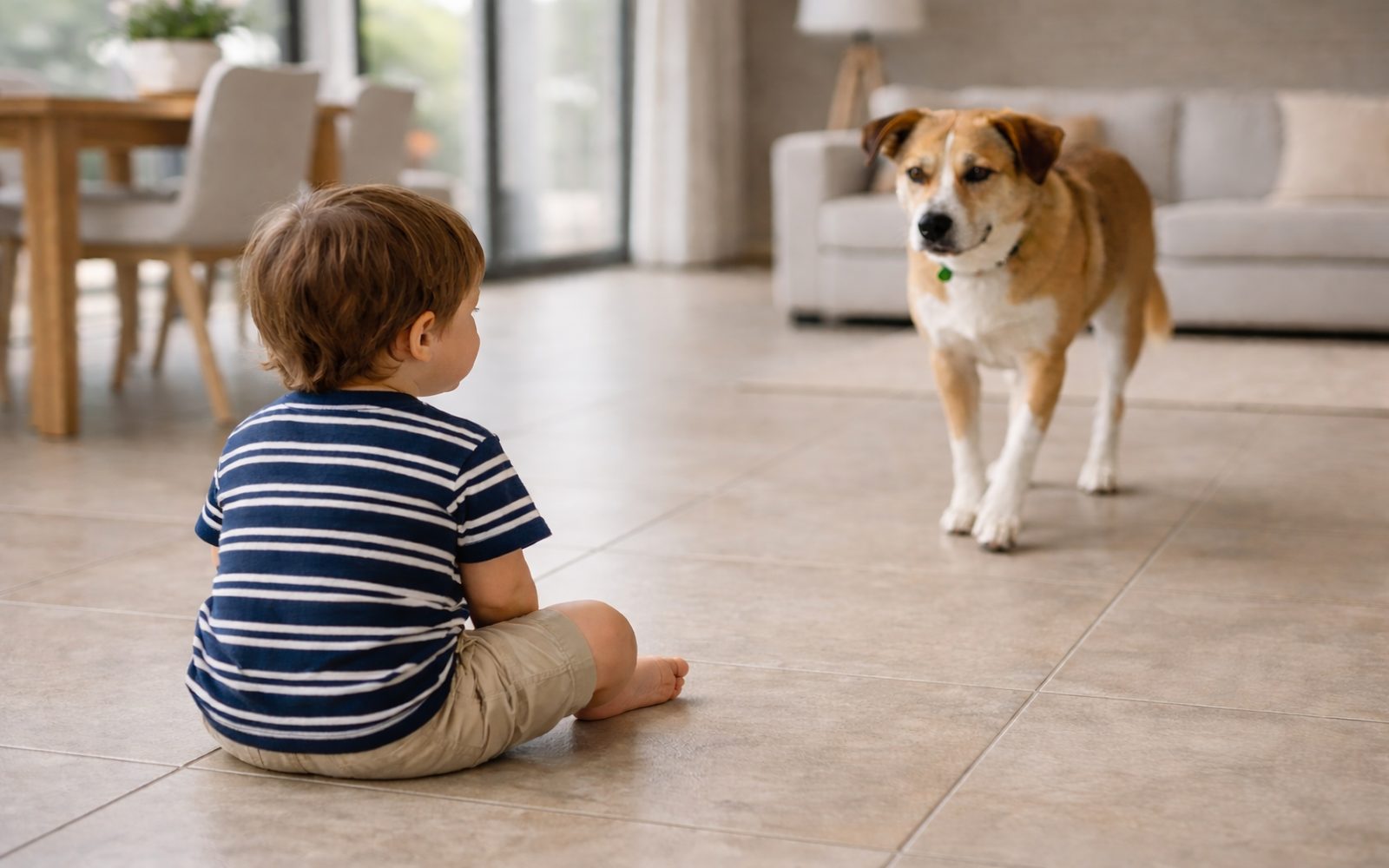
Tile flooring remains one of the most popular choices for active households, especially in homes with kids and pets. Durability, easy maintenance, and long-term value all play a role. But one detail often gets overlooked until a slip happens: tile slip ratings.
Understanding how slip resistance works helps reduce fall risks and makes tile flooring a safer, more confident choice for real-life living.
This guide breaks down tile slip ratings in clear, practical terms—no technical overwhelm—so informed decisions feel easier from the start.
What slip ratings actually measure
Slip ratings indicate how much traction a tile surface provides underfoot. In simple terms, they help predict how likely a surface is to cause slips when walked on, especially when moisture is present.
Modern slip testing focuses on how the tile behaves during movement, not just when standing still. This matters in busy homes where movement is constant.
Slip ratings help account for:
Foot traffic in motion, not static standing
Wet or damp conditions from spills or cleaning
Fast, unpredictable movement from kids and pets
Understanding COF without the confusion
Most slip ratings revolve around COF, or Coefficient of Friction. This number reflects how much resistance exists between a foot and the tile surface.
At a basic level:
Higher COF = more traction and stability
Lower COF = smoother surface with higher slip potential
For residential interiors, tiles with a DCOF (Dynamic Coefficient of Friction) of 0.42 or higher are generally recommended for areas where moisture may be present.
Dynamic testing is especially important because it measures traction while moving—exactly how floors are used in real homes.
Why wet areas demand extra attention
Bathrooms, laundry rooms, kitchens, and entryways see the most moisture. Even small spills can turn smooth tile into a hazard if slip resistance is too low.
Areas that benefit most from higher slip resistance include:
Bathrooms and powder rooms
Laundry rooms
Kitchens near sinks and dishwashers
Entryways and mudrooms
Choosing tile rated for wet conditions reduces risk without sacrificing style. Many homeowners exploring options through educational resources like tile flooring information discover that safer tiles now come in finishes that still feel modern and refined.
Texture, finish, and traction explained
Slip resistance is influenced by more than a rating printed on a box. Surface characteristics play a major role in how tile performs day to day.
Common finish impacts include:
Matte and lightly textured finishes that provide better grip
High-gloss or polished surfaces that reduce traction
Subtle surface variation that improves grip without feeling rough
Textured does not mean uncomfortable. Many modern tiles are designed to feel smooth under bare feet while still offering enough traction for active households.
Pets, paws, and floor safety
Pets interact with flooring differently than people. Smooth tile can cause slipping when pets run, jump, or change direction quickly.
Tiles that support pet safety typically feature:
Light surface texture for paw grip
Matte finishes instead of polished surfaces
Consistent traction across the room
This becomes especially important for older pets or breeds prone to joint and hip issues. Homeowners browsing durable options through curated tile collections like tile flooring selections often prioritize traction alongside appearance for this reason.
Grout lines quietly improve slip resistance
Grout is often treated as a design detail, but it contributes to floor safety more than many realize.
Grout can improve traction by:
Creating additional friction underfoot
Breaking up smooth tile surfaces
Helping feet and paws grip during movement
Smaller tiles typically create more grout lines, which can subtly increase stability without changing the overall look of the space.
Where slip ratings matter most in the home
Not every room requires the same level of slip resistance. Matching the tile to the space keeps floors comfortable and practical.
General guidance for residential spaces:
Bathrooms and laundry rooms: higher slip resistance
Kitchens: moderate-to-high traction
Living areas: balanced comfort and stability
Outdoor-adjacent spaces: moisture-rated tile recommended
This room-by-room approach avoids overcorrecting while still prioritizing safety where it matters most.
Installation choices affect safety too
Even the best-rated tile can become slippery if installation details are overlooked. Installation plays a role in long-term safety and performance.
Key installation factors include:
Proper subfloor preparation and leveling
Correct mortar and grout selection
Consistent spacing and alignment
Professional installation ensures tile surfaces perform the way they were designed to—stable, secure, and long-lasting.
Making confident tile decisions for busy households
Slip ratings are not about limiting design choices. They help align beauty with real-world use.
When traction, finish, layout, and installation work together, tile flooring becomes a practical, family-friendly solution that holds up to daily life with kids and pets.
Ready to choose safer tile flooring?
For help selecting tile flooring that balances style, durability, and slip resistance, scheduling a complimentary in-home consultation makes the process easier. Our flooring experts walk through options, explain safety ratings clearly, and help select tile that fits the way the home is used. Reach out anytime through the contact page to get started.


